
¡Escuchá esta historia!
En 1923 Natalio Botana fundó el Diario Crítica en este edificio, donde actualmente y desde 1973, funciona la Superintendencia de Administración de la Policía Federal Argentina.
El Diario Crítica fue el matutino más popular de la época y su influencia en el periodismo gráfico perdura en la actualidad. Tenía un tono sensacionalista y era uno de los más vendidos del país. Llegó a tirar 300.000 ejemplares por día y casi 900.000 en ocasiones especiales. Tuvo colaboradores célebres, como los escritores Jorge Luis Borges y Roberto Arlt y dejó de editarse en 1962.
Desde un principio, Crítica tuvo un estilo sin precedentes para la época, con grandes titulares en la portada y abundantes ilustraciones, así como el uso de la jerga lunfarda. El diario también carecía de editor, el carácter populista del diario fue más que nada influenciado por Salvadora Medina Onrubia, futura esposa de Botana.
El edificio se inauguró en 1926 y fue uno de los primeros de estilo art decó proyectado por los arquitectos húngaros Andrés y Jorge Kálnay. La obra habría sido en su mayoría diseñada por Jorge, siendo de Andrés solo los ornamentos y decoración de la fachada.
Tenía muchos adelantos para la época y algunos detalles extravagantes, como una sala de armas para su dueño y director. En el sótano estaban las maquinarias y rotativas; en el primer piso la oficina del Directorio, en el segundo el despacho del Botana, el salón de actos, la biblioteca y el archivo; en el tercer piso la redacción; en el cuarto los grabadores y la administración y en el quinto los talleres. Además, tenía consultorios médicos y jurídicos de atención libre, a los cuales se accedía por la entrada posterior en la calle Rivadavia. Botana decía que el edificio era "un palacio para el pueblo".
En la fachada se destaca lo que fue la oficina de Botana porque está retirada del frente, ornamentada con motivos botánicos que aluden al árbol del periodismo y sus frutos y custodiada por cuatro estatuas.
You are in what used to be the headquarters of Crítica Newspaper, founded by the Uruguayan journalist Natalio Botana in 1913, where today, since 1973, the Administration Superintendence of the Argentine Federal Police works.
It was the most popular newspaper of the time and its influence on graphic journalism continues to this day. It had a sensationalist tone and was one of the best sellers in the country. It published 300,000 copies per day and almost 900,000 on special occasions. It had famous collaborators, such as writers Jorge Luis Borges and Roberto Arlt, and ceased publication in 1962.
From the beginning, Crítica had an unprecedented style for the time, with large headlines on the front page and abundant illustrations, as well as the use of lunfardo slang. The newspaper also lacked an editor; the populist character of the paper was mostly influenced by Salvadora Medina Onrubia, Botana's future wife.
The building was inaugurated in 1926 and was one of the first art deco buildings designed by the Hungarian architects Andrés and Jorge Kálnay. The work would have been mostly designed by Jorge, being of Andrés only the ornaments and decoration of the facade.
It featured many innovations for the time and some extravagant details, such as a weapons room for its owner and director. In the basement there were the machinery and presses; on the 1st floor the Board of Directors' office; on the 2nd floor the Botana's office, the assembly room, the library and the archive; on the 3rd floor the editorial office; on the 4th floor the engravers and the administration; and on the 5th floor the workshops. In addition, it had free medical and legal offices, which were accessed through the rear entrance on Rivadavia Street. Botana called the building "a palace for the people".
Look at the facade. Botana's office stands out because it is set back from the front, ornamented with botanical motifs alluding to the tree of journalism and its fruits and guarded by four statues.
Look for the other QR codes and continue discovering the stories of the historic center!

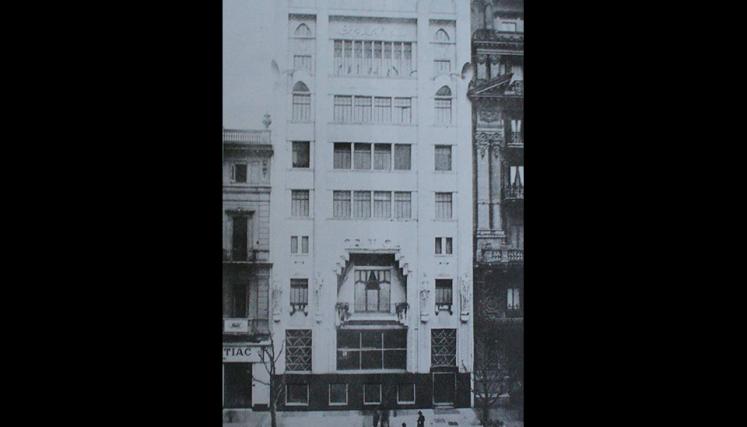

Foto 1-Perspectiva Av de Mayo con Ex Diario Crítica. Año 1933. Fuente: Archivo General de la Nación
Foto 2-Ex Diario Crítica.
Foto 3-Ex Diario Crítica. Fuente: Casco Histórico